I was a Panther first, then a Gator, and finally an Islander. Don’t you love the lack of logic of mascots, and often lack of cultural thought given to these labels? My elementary school was Island Park Elementary (the Panthers), then there was Islander Middle School (the Gators) and finally Mercer Island High School Islanders ugh).
Panthers and Gators were not indigenous to the Northwest, so that was a weird choice. The fact the the high school mascot had a implication of nativity, being of an island, and also the racial connotation being Polynesian, is even more baffling and begs reexamination. Mascots that take upon racial identity or imply them need to be dropped.
Three elementary school, one middle school, and one high school make up the Mercer Island School District. Middle school was the point in where was the chaos of three elementary schools worth of students combining occurred. This meant that the transition in high school was mostly with the same group of students. This allowed students to carry on and develop relationships but also meant that baggage from years past were carried from middle school to high school.
The first part of the trilogy, elementary and middle school was mostly positive. It was a time of confusion, but the love and belief my parents had in all of the facets of who I am helped me not be bothered by what didn’t make sense. It was this foundation from my family that helped me work through not being what the messaging of my school told me.
In math, my teachers told me I should be able to do math in my head, and my PE teacher even at a young age made me feel less than during fitness tests. However, my limited awareness as a child made this seem more normal than traumatic
I wanted to be like others who were good at sports not because of their athletic prowess but because of the admiration that these athletic abilities engendered. I didn’t understand yet that this desire worked against the development of my own identity and who I wanted to be.
If the external influences of peers, teachers and cultured didn’t reinforce gender, cultural and social norms in high school, maybe my understanding of my true self would have occurred in high school and not college. However, this was not the case, and as the messaging became stronger later in middle school, the upcoming conflict filled me with a sense of anxiety.
What comforted me was this idea that like Corey, I would find my Topanga, that the high school fantasy and its pursuits would bring me happiness. Like the first part of a trilogy, there was more hope than dread, unaware of the specter unknown and unseen.
Friday, July 12, 2019


Monday, July 8, 2019
Parenthood: Week 326 – Buffy & Ethan
“Ethan, let’s go find Buffy!” I exclaim every morning as we leave the guest room bathroom where I get ready in the morning. Ethan toddles out of the room and first checks our bedroom, and if she’s already headed downstairs, he will quickly flip onto his stomach and slide feet first down the stairs.
It’s amazing how fast he can make it down the stairs.
Whether she’s under the piano bench or in a corner by the closet, Ethan will find her, with a huge smile on his face, excited to say good morning. Sometimes he will sit down next to her and poke her in the face as he does with me to wake me up. Other times he will stand next to her and try to pet her, flapping his arm up and down. This sometime is a full out slap onto Buffy’s side. However, as he is getting older, he has managed with our encouragement to make this huge motion gentler.
Buffy sits there in the morning, still waking up herself and patiently letting Ethan poke at her face and attempt to pet her. I often try to get him to stop and I do pull him away if he’s being too aggressive. However, Buffy, who almost always has the space to get up and move away more often than not will sit there and let Ethan greet her in his own special way.
As soon as I have Ethan up into his high chair for breakfast, Buffy is there as well. There are times when Ethan ignores her. Other times he feels Buffy lick his bare toes and he giggles as she licks up scraps and crumbs that he drops. When Ethan is eating, he will sometimes look down to check if Buffy there. If he doesn’t see her on his right side, he’ll check the left side, and only after ensuring her presence he will continue his meal. Sometimes Ethan drops food directly to feed her. Sometimes Ethan throws food in frustration and it falls on Buffy’s face, and sometimes Buffy gets hit in the head with a flying sippy cup or utensil as Ethan flails about during a mid-meal tantrum.
During play time Buffy is more often than not in the same room that Ethan is in. Most of the time he ignores her. Other times he will try to get her to walk around so that he can chase her. This game of his to play with her seems opposite since Buffy is the one that is the herding dog, but she seems to play along as he laughs loudly during the chase.
Our of the all the cute endearing things Buffy does for Ethan, the one that gets to me the most is how she helps out with his therapy. Ethan has hearing and speech therapy due to his unilateral hearing loss. These wonderful therapists come to our house to do this work with Ethan. Buffy is not only in the room during these sessions, she is attentive and sometimes actively involved in the therapy. The therapist don’t mind her presence at all as she watches them work with Ethan. The therapist are amazing to watch as an educator. I learn things about pedagogy every time I’m able to be there for a session. It’s also really emotional thing for me to watch as a parent. Seeing someone work so hard to help your child is a beautiful thing to witness.
I joke that maybe Buffy thinks that these people are here for her, but I don’t think so. She gets that they are there for Ethan and in the way she checks in with the therapist, sits closely paces around the room, it’s clear that she’s not nervous but wants to be supportive. Buffy helps Ethan in therapy stay calm and focused, as she does for all of us in our family.
I'm so glad that Ethan has Buffy in his life and I'm so proud of how great Buffy is with Ethan. In immeasurable ways Buffy continues to enrich Ethan's life, and I hope that Buffy feel purpose and fulfillment watching over this little one.
Mornings aren't always easy to a one-year-old in the house, but I always look forward Ethan joy in finding his Buffy.
It’s amazing how fast he can make it down the stairs.
Whether she’s under the piano bench or in a corner by the closet, Ethan will find her, with a huge smile on his face, excited to say good morning. Sometimes he will sit down next to her and poke her in the face as he does with me to wake me up. Other times he will stand next to her and try to pet her, flapping his arm up and down. This sometime is a full out slap onto Buffy’s side. However, as he is getting older, he has managed with our encouragement to make this huge motion gentler.
Buffy sits there in the morning, still waking up herself and patiently letting Ethan poke at her face and attempt to pet her. I often try to get him to stop and I do pull him away if he’s being too aggressive. However, Buffy, who almost always has the space to get up and move away more often than not will sit there and let Ethan greet her in his own special way.
As soon as I have Ethan up into his high chair for breakfast, Buffy is there as well. There are times when Ethan ignores her. Other times he feels Buffy lick his bare toes and he giggles as she licks up scraps and crumbs that he drops. When Ethan is eating, he will sometimes look down to check if Buffy there. If he doesn’t see her on his right side, he’ll check the left side, and only after ensuring her presence he will continue his meal. Sometimes Ethan drops food directly to feed her. Sometimes Ethan throws food in frustration and it falls on Buffy’s face, and sometimes Buffy gets hit in the head with a flying sippy cup or utensil as Ethan flails about during a mid-meal tantrum.
During play time Buffy is more often than not in the same room that Ethan is in. Most of the time he ignores her. Other times he will try to get her to walk around so that he can chase her. This game of his to play with her seems opposite since Buffy is the one that is the herding dog, but she seems to play along as he laughs loudly during the chase.
Our of the all the cute endearing things Buffy does for Ethan, the one that gets to me the most is how she helps out with his therapy. Ethan has hearing and speech therapy due to his unilateral hearing loss. These wonderful therapists come to our house to do this work with Ethan. Buffy is not only in the room during these sessions, she is attentive and sometimes actively involved in the therapy. The therapist don’t mind her presence at all as she watches them work with Ethan. The therapist are amazing to watch as an educator. I learn things about pedagogy every time I’m able to be there for a session. It’s also really emotional thing for me to watch as a parent. Seeing someone work so hard to help your child is a beautiful thing to witness.
I joke that maybe Buffy thinks that these people are here for her, but I don’t think so. She gets that they are there for Ethan and in the way she checks in with the therapist, sits closely paces around the room, it’s clear that she’s not nervous but wants to be supportive. Buffy helps Ethan in therapy stay calm and focused, as she does for all of us in our family.
I'm so glad that Ethan has Buffy in his life and I'm so proud of how great Buffy is with Ethan. In immeasurable ways Buffy continues to enrich Ethan's life, and I hope that Buffy feel purpose and fulfillment watching over this little one.
Mornings aren't always easy to a one-year-old in the house, but I always look forward Ethan joy in finding his Buffy.
Friday, July 5, 2019
The Islander – Part 4: To Call Someone Gay
I acted the best way I knew how to; I just wish I knew more. I wish my empathy muscle in high school was strong enough to fight against the norms to stand and say something, but it wasn’t. While I would never accept myself or people close to me saying the things that I said in high school or keeping quiet while other people said similar things, I’ve had to learn to accept that I did in fact make jokes about homosexuality in high school.
In high school I couldn’t throw a ball (I still can’t). I can’t talk sports, though I’ve learned how to fact it in my adult years. I’m small guy and though I’m more in shape than I’ve ever been in my life, I’m not physically intimidating or impressive. I never will be. The one thing I do got that fits within the narrow stereotype of masculine expression is that I can dish it out. I can insult people and take them apart and come up with great comebacks quickly and succinctly. This is one reason I’m good at teaching middle school students. While I never insult my students intentionally, when I get attitude from my students, I almost always have a response back that can take that comment apart or move the conversations in another direction.
The boys in my high school talked about sex all of the time, and this is one reason why almost all of my close friends were girls, which I’ll get deeper into in a later post. It wasn’t the subject that I disliked, but how they talked about it. There was bragging, jokes about anatomy, demeaning comments about women, that I knew were wrong. Even then I had a feminist streak. Every guy had jokes that were made about them, like some weird community agreement amongst the guys. Some guys received the fat jokes, other ones got made fun of because they walked funny, and one of the categories of insults I got was around my sexuality.
The logic was that because I didn’t fit traditional male gender roles, I was gay. I knew more Broadway shows than professional sports teams, I played the violin, and I was a sci-fi/comic book geek. Therefore, I was made fun of as being gay. The way I handled this was spitting it right back, and because my comebacks were fast and creative, I managed to deflect these horrible words with insults of my own. For the most part this worked. It worked so well that it actually became a game, and one of my friends Sam, was the master at this game.
My senior year I managed to have an open period, (I don’t know how with all of the music classes I took) We would sit in this table in the center of the library and attempt to do homework. It was me, Sam, Kate, and some other people who would join us every so often. We would got into it with the gay jokes, and Sam took it much further than I did, but I laughed along. I used the word “gay” to mean to stupid, to demean others, Sam used the F-word (the Gay insult). I laughed at it, but even then, it felt wrong so I didn’t go there. This doesn’t mean I didn’t do anything wrong because I didn’t speak up against Sam’s use of it and what I know now is hate speech.
I contributed to a hostile environment toward my peers who were LGBTQ+, and even though I didn’t know anyone who was out, I’m sure my actions contributed to that fact. The idea of “Gay-ness” and homosexual was just out there, not in my sense of my community. Even though I made these jokes, I appreciate people who I knew were homosexuals like Elton John, George Michael and Freddie Mercury who were heroes of mine in high school. It was like I was making jokes about an abstraction, an idea that was not real.
Like President Obama, I have evolved. When I got to Northwestern University, I made one gay joke and I was shut down quickly by people in marching band, and I never made another. It didn't take a lot of explanation for me to understand that there was another way surrounded by a more inclusive norms.
I sang and performed with confident and masterful musicians who were out and proud. I came to understand that my freedom to be a different kind of straight man who did not follow gender norms came from these individuals who created a reality that being a man meant more than what I saw in my peers in high school. More important than what people who were LGBTQ+ did for my life, I came to know and understand that they were human beings like me who deserved the rights as I did. In the same way came to be proud of who I was and not take crap from others who questioned my masculinity, I learned that others, most of all from me, should never hear words that make them question or feel bad for the who they are, and/or who they want to be.
I feel shame, regret, and sadness for all of the horrible things I said in high school. If I could travel back in time and talk to my high school self. I would tell myself to breakup with my girlfriend and more importantly stop making gay jokes, and stand up against people who do. If somehow, I got that message in high school, I wouldn’t have wasted so much time degrading my soul for the laughs of others who didn’t care about me and I would have sooner come to understand the person that I would become.
I have more work to do. I can do more to support the LGBTQ+ community and I have an enormous responsibility to help my children understand the LGBTQ+ experience in America with all of its nuance and diversity. I’ve made progress, but there’s more evolution ahead of me.
I’m so sorry to any of my high school peers who I made feel less than for words that I said. I was wrong to make jokes about homosexuality, and I will continue to spend my life making my family, my school, and my community and more diverse and inclusive space for LGBTQ+ people.
This I promise.
In high school I couldn’t throw a ball (I still can’t). I can’t talk sports, though I’ve learned how to fact it in my adult years. I’m small guy and though I’m more in shape than I’ve ever been in my life, I’m not physically intimidating or impressive. I never will be. The one thing I do got that fits within the narrow stereotype of masculine expression is that I can dish it out. I can insult people and take them apart and come up with great comebacks quickly and succinctly. This is one reason I’m good at teaching middle school students. While I never insult my students intentionally, when I get attitude from my students, I almost always have a response back that can take that comment apart or move the conversations in another direction.
The boys in my high school talked about sex all of the time, and this is one reason why almost all of my close friends were girls, which I’ll get deeper into in a later post. It wasn’t the subject that I disliked, but how they talked about it. There was bragging, jokes about anatomy, demeaning comments about women, that I knew were wrong. Even then I had a feminist streak. Every guy had jokes that were made about them, like some weird community agreement amongst the guys. Some guys received the fat jokes, other ones got made fun of because they walked funny, and one of the categories of insults I got was around my sexuality.
The logic was that because I didn’t fit traditional male gender roles, I was gay. I knew more Broadway shows than professional sports teams, I played the violin, and I was a sci-fi/comic book geek. Therefore, I was made fun of as being gay. The way I handled this was spitting it right back, and because my comebacks were fast and creative, I managed to deflect these horrible words with insults of my own. For the most part this worked. It worked so well that it actually became a game, and one of my friends Sam, was the master at this game.
My senior year I managed to have an open period, (I don’t know how with all of the music classes I took) We would sit in this table in the center of the library and attempt to do homework. It was me, Sam, Kate, and some other people who would join us every so often. We would got into it with the gay jokes, and Sam took it much further than I did, but I laughed along. I used the word “gay” to mean to stupid, to demean others, Sam used the F-word (the Gay insult). I laughed at it, but even then, it felt wrong so I didn’t go there. This doesn’t mean I didn’t do anything wrong because I didn’t speak up against Sam’s use of it and what I know now is hate speech.
I contributed to a hostile environment toward my peers who were LGBTQ+, and even though I didn’t know anyone who was out, I’m sure my actions contributed to that fact. The idea of “Gay-ness” and homosexual was just out there, not in my sense of my community. Even though I made these jokes, I appreciate people who I knew were homosexuals like Elton John, George Michael and Freddie Mercury who were heroes of mine in high school. It was like I was making jokes about an abstraction, an idea that was not real.
Like President Obama, I have evolved. When I got to Northwestern University, I made one gay joke and I was shut down quickly by people in marching band, and I never made another. It didn't take a lot of explanation for me to understand that there was another way surrounded by a more inclusive norms.
I sang and performed with confident and masterful musicians who were out and proud. I came to understand that my freedom to be a different kind of straight man who did not follow gender norms came from these individuals who created a reality that being a man meant more than what I saw in my peers in high school. More important than what people who were LGBTQ+ did for my life, I came to know and understand that they were human beings like me who deserved the rights as I did. In the same way came to be proud of who I was and not take crap from others who questioned my masculinity, I learned that others, most of all from me, should never hear words that make them question or feel bad for the who they are, and/or who they want to be.
I feel shame, regret, and sadness for all of the horrible things I said in high school. If I could travel back in time and talk to my high school self. I would tell myself to breakup with my girlfriend and more importantly stop making gay jokes, and stand up against people who do. If somehow, I got that message in high school, I wouldn’t have wasted so much time degrading my soul for the laughs of others who didn’t care about me and I would have sooner come to understand the person that I would become.
I have more work to do. I can do more to support the LGBTQ+ community and I have an enormous responsibility to help my children understand the LGBTQ+ experience in America with all of its nuance and diversity. I’ve made progress, but there’s more evolution ahead of me.
I’m so sorry to any of my high school peers who I made feel less than for words that I said. I was wrong to make jokes about homosexuality, and I will continue to spend my life making my family, my school, and my community and more diverse and inclusive space for LGBTQ+ people.
This I promise.
Monday, July 1, 2019
Parenthood: Week 325 – Ethan's Favorite Book: Good Night Gorilla
Toddlers understand more than they can express. They know more nouns and names for objects than they can speak. They have preferences for foods, clothing, and they even have favorite books. It’s this really cool moment when they reveal these things to you. It’s an expression of the development of cognitive functions. The signs of this growth doesn’t happen in a scheduled or consistent way. It’s not like you see one milestone a week. They come when you don’t expect it and often they come in spurts.
I was so excited when Diana told me a couple week ago that Ethan’s favorite book was Good Night Gorilla (here it is at amazon). It’s such a wonderful sign after months of trying to read to Ethan and him pushing books away, (or trying to eat them), and rarely getting to the end of an eight-page board book, Ethan finally was getting into reading.
I remember having favorite books that I read to Ollie developing before Ollie showed preferences for favorite books to me. So this was new and very cool. It’s a great feeling to have Ethan reach towards a stack of books, pick up his favorite and feel him settle down in my lap in anticipation of me reading this story to him.
Goodnight Gorilla by Peggy Rathmann is one of my favorite childrens books. It’s about a zoo keeper who says goodnight to animals in the zoo. The catch is that there is a gorilla who steals the zookeeper's keys and keeps releasing animals as soon as the zookeeper says goodnight to them. The animals all end up in his bedroom. The zookeepers partner wakes up to find all of the animals crammed in and around the bed. She walks them back to the zoo, but somehow the gorilla ends up back in the bed at the end of the book.
There’s very few words, but the very storytelling more than makes up the few but perfectly chosen text. There’s so much to do in this book when reading it to a child. There’s animals sounds, colors (each key is a different color to match the cages), lots of details in each picture, and a balloon that you can track across each page that gets smaller as it floats into the sky.
I don’t know what Ethan finds appealing about this book. Maybe it’s the different animals sounds we encourage him to make. Maybe it’s the page with all of the “goodnight” dialog bubbles that me and Diana always do in funny voices. Or maybe Ethan can relate to the gorilla sneaking into the bed in the middle of the night to co-sleep, which is Ethan's preferred way of sleeping.
Maybe he knows this books pushed into our arms will give him positive attention from us and he simply enjoys being close to us.
Whatever the reason, it's not important I figure it out. All that matters is that he has a book that he loves, that we enjoy reading to him, and that we have moments when we can share the magic of books together.
I was so excited when Diana told me a couple week ago that Ethan’s favorite book was Good Night Gorilla (here it is at amazon). It’s such a wonderful sign after months of trying to read to Ethan and him pushing books away, (or trying to eat them), and rarely getting to the end of an eight-page board book, Ethan finally was getting into reading.
I remember having favorite books that I read to Ollie developing before Ollie showed preferences for favorite books to me. So this was new and very cool. It’s a great feeling to have Ethan reach towards a stack of books, pick up his favorite and feel him settle down in my lap in anticipation of me reading this story to him.
Goodnight Gorilla by Peggy Rathmann is one of my favorite childrens books. It’s about a zoo keeper who says goodnight to animals in the zoo. The catch is that there is a gorilla who steals the zookeeper's keys and keeps releasing animals as soon as the zookeeper says goodnight to them. The animals all end up in his bedroom. The zookeepers partner wakes up to find all of the animals crammed in and around the bed. She walks them back to the zoo, but somehow the gorilla ends up back in the bed at the end of the book.
There’s very few words, but the very storytelling more than makes up the few but perfectly chosen text. There’s so much to do in this book when reading it to a child. There’s animals sounds, colors (each key is a different color to match the cages), lots of details in each picture, and a balloon that you can track across each page that gets smaller as it floats into the sky.
I don’t know what Ethan finds appealing about this book. Maybe it’s the different animals sounds we encourage him to make. Maybe it’s the page with all of the “goodnight” dialog bubbles that me and Diana always do in funny voices. Or maybe Ethan can relate to the gorilla sneaking into the bed in the middle of the night to co-sleep, which is Ethan's preferred way of sleeping.
Maybe he knows this books pushed into our arms will give him positive attention from us and he simply enjoys being close to us.
Whatever the reason, it's not important I figure it out. All that matters is that he has a book that he loves, that we enjoy reading to him, and that we have moments when we can share the magic of books together.
Friday, June 28, 2019
The Islander – Part 3: The Island
I grew up on an island.
When people think about islands in the Northwest, they often think of small communities that can only be reached by ferries. Filled with bed and breakfasts and quaint shops these islands in the northern part Puget Sound are in fact really nice to visit and get brunch.
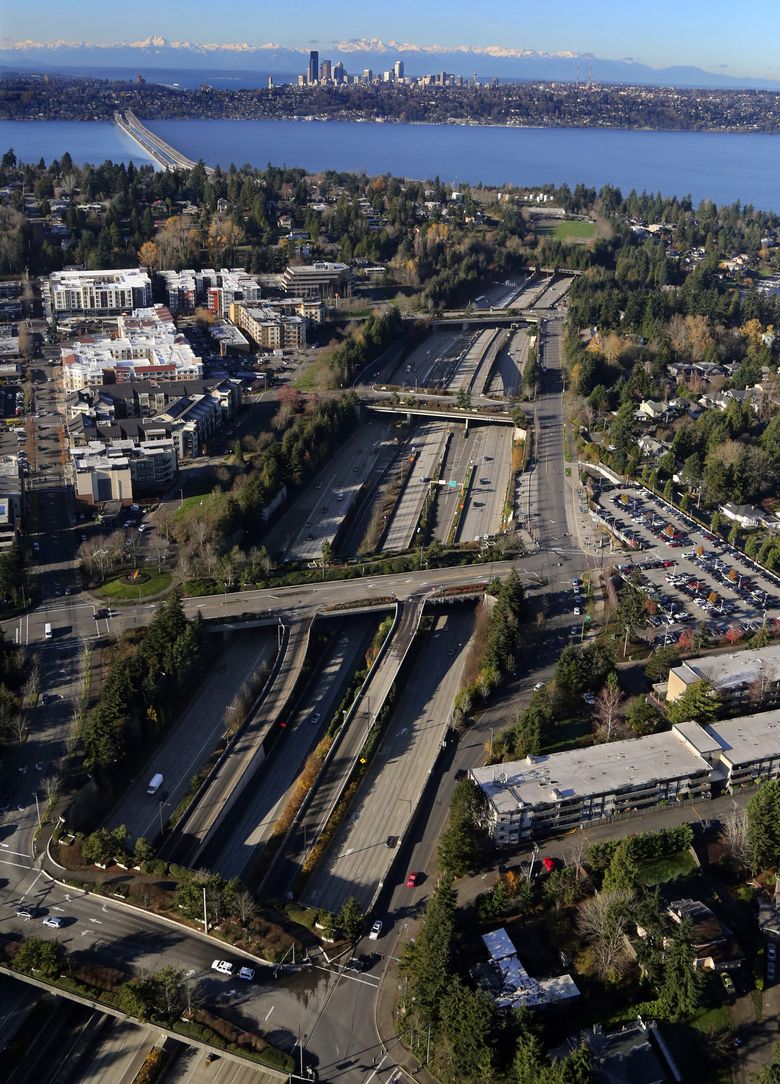 I didn’t grow up on one of those islands. I grew up on an island that had I-90 going through it.
Mercer Island is located in Lake Washington which is a lake just east of Seattle. On the other side of this lake is Bellevue, the largest suburb of Seattle. This city is a middle/upper class community with more Starbucks per capita then is logical and a feeling of serenity despite the fact that there is a freeway that intersects the north part of the island.
Diversity in this island was unique when I grew up. With very few African-Americans and a large Jewish and Asian-America population, my sense of racial normality didn’t reflect much of America. I had no concept that Jewish people were a minority. I didn’t have any friends who were Black or African-American until college because, there were so few in my community.
Systems of oppression were clearly present in retrospect, but growing up on this island I had no concept of the racism and classism that informed the make-up of this city. There was a sense of preservation and control in this city. If there was an option to turn the bridges that connected us to Bellevue and Seattle into draw bridges, many people on this island would probably be in favor of this medieval idea to keep the others out.
The desire to create a feeling of a safe community was a desire to do the best for the children in the city as much as it was an expression of unacknowledged bias and insecurities. The outsides of houses and cars that were parked outside often were not reflected in what was actually inside of the house and the lifestyle of its occupants.
Like in high school, conformity was a measure of success. Differences were only embraced if they didn’t threaten mainstream narrative of whiteness.
That doesn’t mean that this island wasn’t a wonderful place to grow up. The issues related to this community were not unique, and despite these problems recognize there was a much good that occurred in this city.
The island was filled with friendly people, wonderful parks, and great cultural opportunities. You could find on this island, as my family did, amazing private music teachers, a wide variety of ethnically diverse and restaurants, and a wonderful youth theater. Since the island was used by Starbucks to try out a lot of different designs and innovations, we had a lot of Starbucks. This may not be seen as a good thing by some, but growing up, these places provided a feeling of comfort.
The island felt like a college campus. One could drive around the entire island in half an hour and feel a sense of safety in every corner of this city. Walking down the quiet streets on warm summer nights as a teenager, this city felt like a place apart from the chaos of the world, somehow better, and somehow right, innocent, and idealized.
Senior year my family moved off the island to Bellevue. I visited the island a couple times the following year when I visited from college but since then I haven't been back. Part of this has to do the with my relationships with my high school peers after high school. The other piece is a little harder to articulation. I have great memories of Mercer Island but I don't miss this place.
We miss things that somehow feel incomplete. This feeling can change over time. I missed my maternal grandmother for a year or two after she passed away, but I don't miss her anymore. I have fond thoughts about her, and I'm proud that I knew her. I came to a point where I understood that the time we spent together was enough, and I was blessed to have the time to hold her in my heart.
My time on my island was enough for me. When I did miss Mercer Island, I missed the idea more than the reality. The older I got the more I realized the idea wasn't real, and was a fantasy that would pull me away from who I wanted to and needed to become.
When people think about islands in the Northwest, they often think of small communities that can only be reached by ferries. Filled with bed and breakfasts and quaint shops these islands in the northern part Puget Sound are in fact really nice to visit and get brunch.
I didn’t grow up on one of those islands. I grew up on an island that had I-90 going through it.
Mercer Island is located in Lake Washington which is a lake just east of Seattle. On the other side of this lake is Bellevue, the largest suburb of Seattle. This city is a middle/upper class community with more Starbucks per capita then is logical and a feeling of serenity despite the fact that there is a freeway that intersects the north part of the island.
Diversity in this island was unique when I grew up. With very few African-Americans and a large Jewish and Asian-America population, my sense of racial normality didn’t reflect much of America. I had no concept that Jewish people were a minority. I didn’t have any friends who were Black or African-American until college because, there were so few in my community.
Systems of oppression were clearly present in retrospect, but growing up on this island I had no concept of the racism and classism that informed the make-up of this city. There was a sense of preservation and control in this city. If there was an option to turn the bridges that connected us to Bellevue and Seattle into draw bridges, many people on this island would probably be in favor of this medieval idea to keep the others out.
The desire to create a feeling of a safe community was a desire to do the best for the children in the city as much as it was an expression of unacknowledged bias and insecurities. The outsides of houses and cars that were parked outside often were not reflected in what was actually inside of the house and the lifestyle of its occupants.
Like in high school, conformity was a measure of success. Differences were only embraced if they didn’t threaten mainstream narrative of whiteness.
That doesn’t mean that this island wasn’t a wonderful place to grow up. The issues related to this community were not unique, and despite these problems recognize there was a much good that occurred in this city.
The island was filled with friendly people, wonderful parks, and great cultural opportunities. You could find on this island, as my family did, amazing private music teachers, a wide variety of ethnically diverse and restaurants, and a wonderful youth theater. Since the island was used by Starbucks to try out a lot of different designs and innovations, we had a lot of Starbucks. This may not be seen as a good thing by some, but growing up, these places provided a feeling of comfort.
The island felt like a college campus. One could drive around the entire island in half an hour and feel a sense of safety in every corner of this city. Walking down the quiet streets on warm summer nights as a teenager, this city felt like a place apart from the chaos of the world, somehow better, and somehow right, innocent, and idealized.
Senior year my family moved off the island to Bellevue. I visited the island a couple times the following year when I visited from college but since then I haven't been back. Part of this has to do the with my relationships with my high school peers after high school. The other piece is a little harder to articulation. I have great memories of Mercer Island but I don't miss this place.
We miss things that somehow feel incomplete. This feeling can change over time. I missed my maternal grandmother for a year or two after she passed away, but I don't miss her anymore. I have fond thoughts about her, and I'm proud that I knew her. I came to a point where I understood that the time we spent together was enough, and I was blessed to have the time to hold her in my heart.
My time on my island was enough for me. When I did miss Mercer Island, I missed the idea more than the reality. The older I got the more I realized the idea wasn't real, and was a fantasy that would pull me away from who I wanted to and needed to become.
Monday, June 24, 2019
Parenthood: Week 324 - Birthday Party Tips
I have probably been to about forty children’s birthday parties since the birth of my first son, Ollie. I probably haven’t seen it all, but I’ve seen a lot. I’ve been to some amazing parties, and I’ve been to some that have been excruciating. So here’s a list of recommendation on how to make your child’s birthday party awesome.
1. Embrace the transition
Your child’s first birthday party is usually an adult party with some babies around. This is a celebration your child will not remember. It is more of acknowledgement of the hard work of the parents put in during the first year of that child’s life and a thank you to all the people who helped make that first year possible. So it’s perfectly appropriate to have activities, food, and drink that is more focused on the adults.
This slowly changes until around age 5 where birthday parties are not kid parties with some adults around. The priority is for your child to interact with their friends. Adults will get a chance to socialize but these conversations will be broken up by needing to attend to children. Food becomes pizza and juice, and that’s fine.
This transition will happen, but it can be a challenge to fully understand. It’s not that one type of party is better, you just need to learn to appreciate how they are different and find value in these different experiences.
2. Cupcakes
You have some activity, everyone eats, the child gets that happy birthday song sung to them and now everyone wants cake.
The process of cutting up a cake quickly and neatly, placing them on plates with utensils, and passing out these plates is almost impossible to do without a lot of help, and is not fun when you have children waiting for cake, which for many is the climax of the party. The answer: cupcakes. There’s no need for utensils, and you can even get away without plates. The wrappers mean that many adults can help pass them out without worrying about sanitation.
If you still a cake, I recommend buying a small cake for the candle blowing thing andbuy cupcakes to serve the majority of the people quickly.
3. Location, Location, Location
Do birthday parties at places that regularly do birthday parties. I know it doesn’t seem very creative or original to do birthday parties in the same places other families do them. However there’s a reason people use the same kids-themed play spaces: the staff knows what they are doing.
If you hold your child’s party at a place that regularly holds children’s birthday parties there staff will be ready for you. They will have a bin for presents, their staff will most likely help you set-up and clean-up. Sometimes they even pass out food, and help you load stuff in and out of your car.
If you want to do your child’s party at a place that doesn’t usually host children’s birthday parties, ask a friend to show up early and help you out, because chances are, the staff will do nothing.
4. Pizza
It’s really the perfect birthday party food. You can pre-plate the pizza and put them out on tables,so kids don’t have to grab their own food (children are HORRIBLE at buffet lines). Most children are happy with cheese pizza (and gluten-free pizza is not hard to come by). Set up the tables with some bowls of fruit, crackers, and some juice boxes and your are set. Some more adult-orientated food can be at a side table. I’m already sick of eating pizza and it’s only the beginning of the summer birthday season. However it works, so it’s best not to fight it.
5. Presents
Avoid having present opening be part of parties. It is socially awkward, children often loose interest in this process, and they aren’t very good at being polite when they don’t like a present.
If you want people to bring presents, tell them not to. It’s your party. If instead of doing presents you want them to donate to a charity, do a book exchange, or something completely different than say so on the invitation. Creating an experience that children can focus on the value of friendship through a shared experience over material gift is important.
6. Enjoy The Party
It’s really hard to plan children’s birthday parties. Just remember it’s not going to be perfect, and to take the time to enjoy the party yourself.
Stop hosting for a minute, find the smile in your child’s face and look around the room at all these people who are there for your child. Your child brought these people together to share love. That’s a magical, life-affirming, and powerful thing to witness and feel, so take a moment to experience this.
1. Embrace the transition
Your child’s first birthday party is usually an adult party with some babies around. This is a celebration your child will not remember. It is more of acknowledgement of the hard work of the parents put in during the first year of that child’s life and a thank you to all the people who helped make that first year possible. So it’s perfectly appropriate to have activities, food, and drink that is more focused on the adults.
This slowly changes until around age 5 where birthday parties are not kid parties with some adults around. The priority is for your child to interact with their friends. Adults will get a chance to socialize but these conversations will be broken up by needing to attend to children. Food becomes pizza and juice, and that’s fine.
This transition will happen, but it can be a challenge to fully understand. It’s not that one type of party is better, you just need to learn to appreciate how they are different and find value in these different experiences.
2. Cupcakes
You have some activity, everyone eats, the child gets that happy birthday song sung to them and now everyone wants cake.
The process of cutting up a cake quickly and neatly, placing them on plates with utensils, and passing out these plates is almost impossible to do without a lot of help, and is not fun when you have children waiting for cake, which for many is the climax of the party. The answer: cupcakes. There’s no need for utensils, and you can even get away without plates. The wrappers mean that many adults can help pass them out without worrying about sanitation.
If you still a cake, I recommend buying a small cake for the candle blowing thing andbuy cupcakes to serve the majority of the people quickly.
3. Location, Location, Location
Do birthday parties at places that regularly do birthday parties. I know it doesn’t seem very creative or original to do birthday parties in the same places other families do them. However there’s a reason people use the same kids-themed play spaces: the staff knows what they are doing.
If you hold your child’s party at a place that regularly holds children’s birthday parties there staff will be ready for you. They will have a bin for presents, their staff will most likely help you set-up and clean-up. Sometimes they even pass out food, and help you load stuff in and out of your car.
If you want to do your child’s party at a place that doesn’t usually host children’s birthday parties, ask a friend to show up early and help you out, because chances are, the staff will do nothing.
4. Pizza
It’s really the perfect birthday party food. You can pre-plate the pizza and put them out on tables,so kids don’t have to grab their own food (children are HORRIBLE at buffet lines). Most children are happy with cheese pizza (and gluten-free pizza is not hard to come by). Set up the tables with some bowls of fruit, crackers, and some juice boxes and your are set. Some more adult-orientated food can be at a side table. I’m already sick of eating pizza and it’s only the beginning of the summer birthday season. However it works, so it’s best not to fight it.
5. Presents
Avoid having present opening be part of parties. It is socially awkward, children often loose interest in this process, and they aren’t very good at being polite when they don’t like a present.
If you want people to bring presents, tell them not to. It’s your party. If instead of doing presents you want them to donate to a charity, do a book exchange, or something completely different than say so on the invitation. Creating an experience that children can focus on the value of friendship through a shared experience over material gift is important.
6. Enjoy The Party
It’s really hard to plan children’s birthday parties. Just remember it’s not going to be perfect, and to take the time to enjoy the party yourself.
Stop hosting for a minute, find the smile in your child’s face and look around the room at all these people who are there for your child. Your child brought these people together to share love. That’s a magical, life-affirming, and powerful thing to witness and feel, so take a moment to experience this.
Friday, June 21, 2019
The Islander – Part 2: The Fantasy
Part 2:
I see in Ollie, my 6 years old, the fantasies of my childhood. Like Ollie, when I was a child, my fantasies were those of Disney movies, superheroes and Lego sets. I would create complex stories an scenarios to process the world around me and escape with a sense of creation and control that often feels out of reach to children. In Star Wars films, comics books, I was able to replay and deconstruct human interactions and through fantasy figure out what reality was, could, and meant to my experience as a human being.
As I got older, a different kind of fantasy entered my life.
When I watched my favorite cartoon, Batman: The Animated Series. I would follow up watching this show with playing with my toys and pretending in playgrounds that I was Batman. However, I never had any illusions that I could ever actually be Batman. I was keenly aware even as a child that as much fun it was to pretend to be Batman, this was a fantasy that could never play out.
As I got older into my teenage year and my thoughts about my future came to the fore, I found myself watching less cartoons and got into two other shows that became my favorites, The Wonder Years and Boy Meets World. Unlike my fantasies around superheroes, I didn’t see these shows as unrealistic depictions of what my life could be like, instead I saw these fantasies as realities to pursue.
In the 1990s an explosion in teen-centric culture occurred in popular music, television shows, and films. While there were many shows like Buffy, The Vampire Slayer that addressed issues related to the high school experience with thought, and insights (albeit in a genre which included vampires, with actors who were not teenager).
Other art, like the numerous teen-sploitation films (She’s All That was great, but many were horrible) added to a distorted caricature of high school that is more dramatic, less diverse, over-sexualized, and wholly unrealistic. But my classmates and I didn’t realize that as we moved through middle school and created goals, and priorities for our high school reality, the fantasies we were consuming.
The drama, the independence, and to my male cis-gendered, heterosexual teenage mind, the sexual dynamics and expressions of masculinity that I now understand as destructive, seemed attractive, and in some ways was seductive.
This confusion set up my generation to pursue unrealistic fantasies that come into conflict with a better, more meaningful and realistic reality. Instead of caring and focusing on friends who were real, we pursued friends we thought we should have. Instead of expressing joy in what we loved to do, we pretended to like what we felt would help us fit in, and instead of embracing and celebrating diversity, we fought for a status quo to bring us predictability and comfort at the cost of our self-esteem.
This tension didn’t always end up negatively, but it had to be overcome to accomplish positivity for ourselves and our community.
Unfortunately this pursuit of unrealistic fantasies wasn't limited to my high school...
I see in Ollie, my 6 years old, the fantasies of my childhood. Like Ollie, when I was a child, my fantasies were those of Disney movies, superheroes and Lego sets. I would create complex stories an scenarios to process the world around me and escape with a sense of creation and control that often feels out of reach to children. In Star Wars films, comics books, I was able to replay and deconstruct human interactions and through fantasy figure out what reality was, could, and meant to my experience as a human being.
As I got older, a different kind of fantasy entered my life.
When I watched my favorite cartoon, Batman: The Animated Series. I would follow up watching this show with playing with my toys and pretending in playgrounds that I was Batman. However, I never had any illusions that I could ever actually be Batman. I was keenly aware even as a child that as much fun it was to pretend to be Batman, this was a fantasy that could never play out.
As I got older into my teenage year and my thoughts about my future came to the fore, I found myself watching less cartoons and got into two other shows that became my favorites, The Wonder Years and Boy Meets World. Unlike my fantasies around superheroes, I didn’t see these shows as unrealistic depictions of what my life could be like, instead I saw these fantasies as realities to pursue.
In the 1990s an explosion in teen-centric culture occurred in popular music, television shows, and films. While there were many shows like Buffy, The Vampire Slayer that addressed issues related to the high school experience with thought, and insights (albeit in a genre which included vampires, with actors who were not teenager).
Other art, like the numerous teen-sploitation films (She’s All That was great, but many were horrible) added to a distorted caricature of high school that is more dramatic, less diverse, over-sexualized, and wholly unrealistic. But my classmates and I didn’t realize that as we moved through middle school and created goals, and priorities for our high school reality, the fantasies we were consuming.
The drama, the independence, and to my male cis-gendered, heterosexual teenage mind, the sexual dynamics and expressions of masculinity that I now understand as destructive, seemed attractive, and in some ways was seductive.
This confusion set up my generation to pursue unrealistic fantasies that come into conflict with a better, more meaningful and realistic reality. Instead of caring and focusing on friends who were real, we pursued friends we thought we should have. Instead of expressing joy in what we loved to do, we pretended to like what we felt would help us fit in, and instead of embracing and celebrating diversity, we fought for a status quo to bring us predictability and comfort at the cost of our self-esteem.
This tension didn’t always end up negatively, but it had to be overcome to accomplish positivity for ourselves and our community.
Unfortunately this pursuit of unrealistic fantasies wasn't limited to my high school...
Subscribe to:
Posts (Atom)